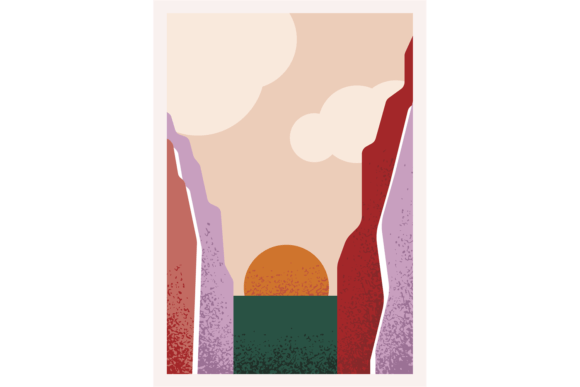
Japanese Style Landscape. Mountain Sunse
A Quiet Sunset, Not Just a Silhouette
First glance at Japanese Style Landscape. Mountain Sunse isn’t about boldness—it’s about breath. The composition leans into classic Japanese landscape sensibility: layered mountains receding into soft gradients, a low sun casting warm, hushed light across the horizon, and subtle negative space that invites the eye to linger. It doesn’t shout; it settles. That makes it instantly compelling for embroidery projects where elegance and intention matter more than flash—think nursery wall hangings, linen tea towels for a boutique kitchen line, or minimalist sweatshirt fronts for slow-living apparel brands.
Where This Design Finds Its Truest Stitch
I tested Japanese Style Landscape. Mountain Sunse as the centerpiece for a custom embroidered cotton tote bag—medium-weight natural canvas, medium-stabilizer backing, 4-inch hoop. The result? Calm clarity. The clean vector lines translated beautifully into satin and fill stitches without crowding. No detail got lost in the fabric weave, and the gentle slope of the mountains gave smooth, flowing stitch paths—ideal for consistent tension and clean thread transitions.
It also worked surprisingly well on a lightweight organic cotton baby blanket (with tear-away + cutaway stabilizer combo), where subtlety is non-negotiable. The design’s lack of tiny internal linework or micro-textures meant no skipped stitches or thread breaks—even at slower machine speeds. For Etsy sellers listing handmade nursery decor or personalized holiday gifts, this is a quiet win: it looks intentional, not overworked.
As an embroidered patch on twill fabric? Yes—but only if you keep the finished size above 3.5 inches wide. Below that, the mountain contours begin to blur under dense fill stitching. And on curved surfaces like baseball caps? I’d recommend it only for front-panel placement with a flat bill and firm cap stabilizer—avoid the crown curve unless you’re willing to split the design across two hoops.
What Requires Thoughtful Handling
Japanese Style Landscape. Mountain Sunse isn’t built for every surface. On stretchy knits (like lightweight sweatshirts or baby onesies), the long horizontal lines can distort if stabilizer choice or hooping isn’t precise—so test on scrap first, and consider a light fusible topping. On dark fabrics, the sunset warmth reads best with high-contrast thread: burnt orange over navy, gold over charcoal, or cream over black—not beige or pale yellow. Without that contrast, the mood flattens.
Thin fabrics (like voile or fine rayon) need extra care. The design’s open layout means less coverage per square inch—so stitch density matters more than usual. Too dense, and you’ll get puckering; too sparse, and the fabric shows through unevenly. A mid-density fill stitch (not heavy satin) with 0.8mm stitch length kept things balanced on my linen pillow cover test.
And while the vector origin (EPS/SVG/JPG) gives flexibility, remember: this is a graphic, not a pre-digitized machine embroidery design. You’ll need to digitize it—or hire someone who does—before stitching. That means reviewing stitch direction, underlay strategy for the mountain slopes, and whether the sun’s glow should be a soft satin blend or a subtle running-stitch halo. Don’t assume the JPG preview tells you how it will stitch.
Why Customers Notice the Difference
Handmade products thrive on perceived care—and Japanese Style Landscape. Mountain Sunse delivers that quietly. When stitched cleanly, it signals intentionality: a thoughtful pause in a busy world. Buyers of personalized gifts or boutique merchandise don’t just see a mountain—they feel the stillness it implies. That translates directly to trust. A customer buying a custom embroidered apron with this design isn’t just getting fabric and thread; they’re investing in atmosphere.
For craft business owners and Etsy sellers, that emotional resonance lifts perceived value. It pairs effortlessly with neutral palettes, natural fibers, and minimalist branding—making it a reliable asset for cohesive shop aesthetics. It also scales well across product types: same core design, different impact—soft on a baby onesie, grounded on a jute tote, refined on a silk pillow cover.
Your Practical Checklist Before Stitching
- Test on scrap fabric—especially if using textured, dark, or stretchy material.
- Check thread color contrast before committing to full production. Print a B&W mockup to assess tonal balance.
- Confirm hoop size and digitizing scope: Will your largest hoop comfortably frame the full composition at your target size?
- Inspect small details in the vector file—especially the sun’s edge and mountain ridgelines—to ensure they’ll translate cleanly into stitch paths.
- Use proper stabilizer: Medium cutaway for stable wovens, tear-away + topping for knits or sheers.
- Verify licensing before selling finished items or digital embroidery files—this is a Graphics asset, not inherently a commercial-use embroidery file.
- Compare light/dark background mockups to guide thread selection and presentation photos.
Not Just Another Illustration—A Design Decision
Japanese Style Landscape. Mountain Sunse stands apart because it asks for restraint—and rewards it. It won’t dominate a busy t-shirt print or compete with bold typography. Instead, it anchors. It slows down the scroll. That makes it especially valuable for creators building intentional brands: small shop owners curating mindful home goods, embroidery designers crafting heirloom baby items, or apparel decorators seeking signature pieces that feel personal, not mass-produced.
If your next project calls for quiet confidence—not volume—this is one of those rare Illustrations that earns its place in real-world stitching. Just remember: its strength lies in how thoughtfully you bring it to life, not how fast you get it onto fabric.