Ancient Filigree Border. Flourish Ornate
First Impressions: Delicate, Timeless, and Quietly Commanding
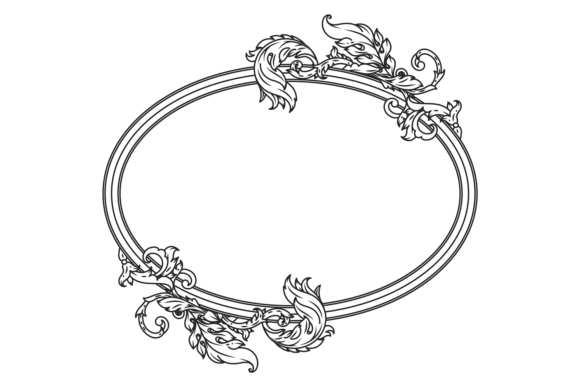
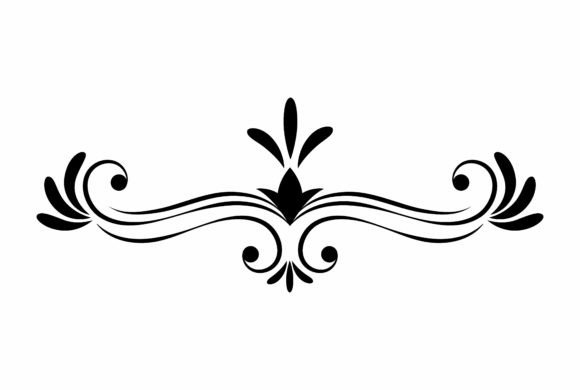
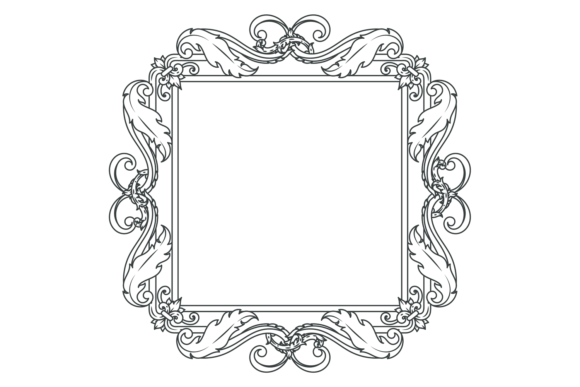
When I opened Ancient Filigree Border. Flourish Ornate, I didn’t see just another decorative frame—I saw a quiet conversation between history and modern craft. The line work is slender but intentional, with graceful loops, tapered terminals, and subtle asymmetry that avoids looking sterile or over-digitized. It feels hand-drawn in spirit, even though it’s clearly optimized for clean vector output. There’s no visual noise—no redundant flourishes or competing weight shifts—just confident rhythm. That matters deeply when you’re translating this into thread.
Real-World Test: A Linen Tea Towel for a Local Bakery’s Holiday Line
Last week, I used Ancient Filigree Border. Flourish Ornate to frame a custom monogram on a heavyweight linen tea towel—part of a small-batch holiday collection for a neighborhood bakery. The border wrapped the edges cleanly, leaving breathing room around the central motif without shrinking the perceived size of the design. Customers responded immediately: “It looks expensive,” one said. “Like something my grandmother would’ve framed.” That’s the power of restraint. This isn’t a loud, trendy border—it’s a detail that earns trust before the first stitch is even sewn.
Where It Shines (and Where It Asks for Extra Care)
Ancient Filigree Border. Flourish Ornate excels in projects where elegance supports function—not overshadows it:
- Embroidered tote bags — especially natural fibers like canvas or heavy cotton, where the fine lines read clearly against texture
- Sweatshirt embroidery — placed along the hem or sleeve cuff, adding sophistication without bulk
- Baby embroidery — on burp cloths or blanket corners, where softness and heritage feel matter more than flash
- Patches and aprons — as a refined outer edge that signals handmade care, not mass production
- Holiday gifts and wedding favors — think embroidered napkin sets or pillow covers where subtlety reads as thoughtfulness
But let’s be direct: this design asks for attention in execution. On stretchy fabric, like jersey or ribbed knit, those slender curves can distort unless stabilized with cutaway + tear-away combo. On dark fabric, avoid light thread unless you’re intentionally going for ethereal contrast—the filigree loses definition fast in low-contrast pairings. And on curved surfaces like caps? Scale down significantly or use only one quadrant—full perimeter stitching fights gravity and tension.
What It Does for Your Craft Business
As an Etsy seller and small shop owner myself, I judge design assets by how they affect buyer perception—not just stitch count. Ancient Filigree Border. Flourish Ornate elevates perceived value instantly. It doesn’t scream “handmade” — it whispers “considered.” That distinction builds customer trust, especially for personalized gifts and boutique branding. When your embroidered pillow cover features this border, buyers don’t just see decoration—they register intention, care, and continuity with timeless craft traditions.
It also works beautifully in printable mockups and digital product previews. Because it’s delivered as EPS, SVG, transparent PNG, and JPG, you can drop it cleanly into lifestyle scenes without clipping artifacts or background bleed—critical when selling embroidery files or curated design assets.
Design Notes Every Embroidery Professional Should Check
Before stitching Ancient Filigree Border. Flourish Ornate into your next project, run through these quietly essential steps:
- Test on scrap fabric first — especially if using textured weaves or blends; filigree reveals inconsistencies in tension faster than bold motifs
- Review stitch density — fine lines demand balanced fill and satin stitch ratios; too much density flattens the delicacy, too little leaves gaps
- Confirm hoop size compatibility — while the vector file scales freely, your machine’s maximum hoop dimensions will dictate practical sizing limits
- Inspect small details at 200% zoom — look for stray anchor points or micro-loops that may cause thread breaks or skipped stitches
- Test in black-and-white mockups — this border relies on shape and flow, not color; if it reads poorly in grayscale, it’ll struggle in thread
- Compare light/dark fabric backgrounds — what reads as elegant on ivory linen may vanish on charcoal twill without adjusted thread weight or underlay
- Use proper stabilizer — medium-weight cutaway for stable fabrics, lightweight tear-away for delicate linens or baby items
- Verify licensing — since this falls under Illustrations and Graphics, confirm whether your intended use (e.g., selling finished embroidered patches or digital embroidery files) aligns with the license terms
Final Thought: Not Just Ornament—A Design Decision
Ancient Filigree Border. Flourish Ornate isn’t filler. It’s punctuation. It tells the viewer where to pause, where to linger, where the handmade moment begins and ends. In a market saturated with oversized, high-density, “more-is-more” embroidery, choosing this border is a quiet act of confidence—in your skill, your brand voice, and your customer’s ability to appreciate nuance. Whether you’re stitching a custom sweatshirt for a local teacher or building a cohesive line of nursery decor, this design doesn’t distract. It deepens.
Use it where refinement matters more than volume. Where legacy meets laundry day. Where every loop has earned its place.