Abstract Pattern SVG: Organic Shapes
A Designer’s First Look—What This Set *Actually* Feels Like in Hand
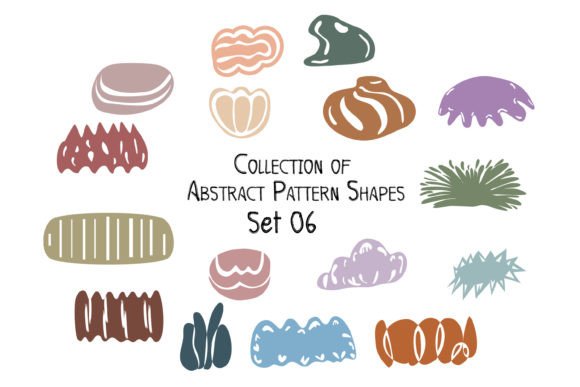
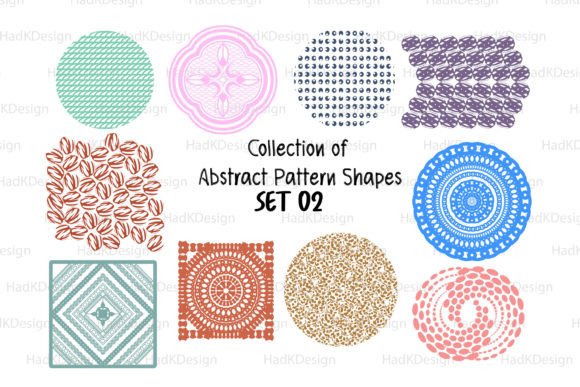
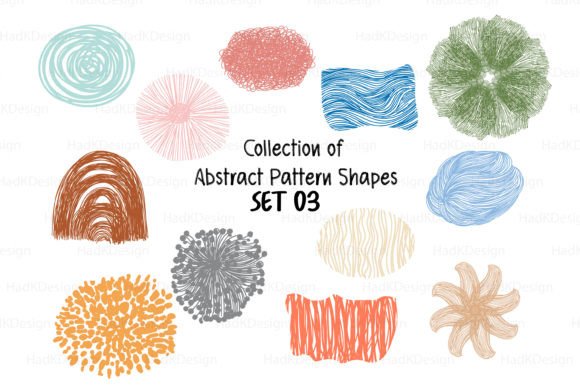
Opening Abstract Pattern SVG, Organic Shapes feels like stepping into a quiet studio at dawn—soft light, no sharp edges, just gentle curves and breathing space. These aren’t rigid geometrics disguised as “organic.” They’re truly fluid: amoebic loops, asymmetric swirls, subtle asymmetries that suggest growth, not repetition. As an embroidery designer who’s stitched hundreds of client projects—from boutique baby onesies to limited-run aprons for local cafés—I immediately scanned for rhythm, balance, and *stitchability*. Ten vector patterns, yes—but what matters is how each one translates when reduced to thread on fabric. The mood? Calm, intentional, quietly modern—not trendy, not dated. Exactly the kind of design that holds up across seasons and customer demographics.
Where It Shines: Real Projects That Just *Work*
I tested three motifs from Abstract Pattern SVG, Organic Shapes on a custom embroidered tote bag for a small ceramics studio—linen canvas, medium-weight, with visible weave. One motif became a subtle corner accent near the strap; another, enlarged slightly, anchored the center front. The result? Elevated but never fussy. Customers noticed it—not as “look at this design,” but as “this bag feels *thoughtful*.” That’s the sweet spot.
- Sweatshirt embroidery: Works beautifully on relaxed-fit crewnecks—especially when placed off-center or along a seam line. The organic flow softens the garment’s structure without competing.
- Baby embroidery: Ideal for onesies and burp cloths. No tiny details to snag or unravel; smooth contours hold up through washing and wear.
- Embroidered patch: Clean vector paths convert cleanly to appliqué or satin-stitched patches. I ran one as a fill-stitch patch on denim—no skipped stitches, no distortion.
- Holiday & wedding gifts: Paired with neutral thread (heather grey, oatmeal, deep sage), it reads as heirloom-quality—not seasonal, not cliché.
- Etsy seller & small shop product: Stands out in listings because it’s distinctive *and* versatile. Use it across tea towels, pillow covers, and aprons while keeping visual cohesion.
Where to Pause—Not Flaws, Just Smart Boundaries
This isn’t a “throw-it-on-anything” set—and that’s its strength. Abstract Pattern SVG, Organic Shapes asks for intention. Here’s where I slowed down:
- Small hoop sizes (under 4”): Some motifs have wider negative space or elongated forms. Not all scale gracefully below 3.5”. Test first—or choose the tighter, more compact variants from the set.
- Textured or stretchy fabric: On slubbed linen or lightweight knits, very fine interior curves can blur visually. A touch more stabilizer helps—but also consider simplifying stitch density manually if your machine allows.
- Dark fabric + light thread: The subtlety shines, but low-contrast combos (e.g., cream thread on charcoal) risk reading as “faint” rather than “refined.” Always mock up in black and white first.
- Curved surfaces (caps, curved pillow fronts): Avoid motifs with long, unbroken horizontal lines—they’ll warp. Favor those with vertical emphasis or broken rhythm.
- Frequent-wash items (kitchen towels, baby blankets): Stick to medium-density fill stitches. Avoid ultra-dense satin borders unless you’ve verified durability on scrap fabric.
Why It Builds Trust—Beyond Just Looks
When customers see Abstract Pattern SVG, Organic Shapes on a finished product, they don’t see “clipart.” They sense care: the spacing between elements, the weight of line, the absence of visual noise. That translates directly to perceived value. A handmade product with this design feels *designed*, not assembled. For Etsy sellers, that means fewer “Is this really handmade?” questions—and more “How did you find something so unique?” For boutique branding, it supports consistency without rigidity: same motif, different scale, different placement, same quiet confidence.
It also avoids the “generic vector” trap. Unlike overly symmetrical geometry clipart, these shapes invite interpretation—making them ideal for personalized gifts where meaning matters more than literal imagery. A new parent doesn’t need a stork; they need something that feels like *their* calm, their rhythm, their story.
Practical Notes Every Embroidery Designer Should Run Through
- Test on scrap fabric first—not just for stitch quality, but for how the shape interacts with your fabric’s drape and texture.
- Check thread color contrast in natural light *and* under store lighting. Organic shapes rely on tone and weight as much as form.
- Review stitch density before sending to machine. Some vectors translate to dense fills; others may need manual adjustment for breathability.
- Confirm hoop size compatibility for your most-used garments (e.g., standard left-chest placement on tees).
- Inspect small details at actual stitch size—what looks elegant at 100% on screen may vanish at 2x2”.
- Mock up in black and white to verify readability—especially important for digital embroidery files used in printable mockups.
- Compare light vs. dark fabric backgrounds—some motifs gain presence on darks; others sing on lights.
- Use proper stabilizer—medium tear-away works for most cottons and linens; cut-away is safer for knits or high-wear items.
- Verify licensing before selling finished products or digital embroidery files. Since this is categorized as Illustrations and Graphics, confirm commercial use rights apply to your intended output (e.g., embroidered patches for resale, digital applique designs).
The Bottom Line for Your Next Project
Abstract Pattern SVG, Organic Shapes isn’t background noise—it’s a thoughtful voice. It belongs on pieces meant to be held, worn, gifted, kept. Not every motif fits every project, and that’s okay. Its power lies in selectivity: choosing the right shape, the right scale, the right fabric, the right moment. Whether you’re stitching a single custom sweatshirt or building a cohesive line of small shop products, this set gives you quiet confidence—not flash, not filler, just honest, stitch-ready design integrity.