Stylized Indian Elephant Pattern Silhouette Graphics Review
First Impressions of an Ornate, Cultural Statement
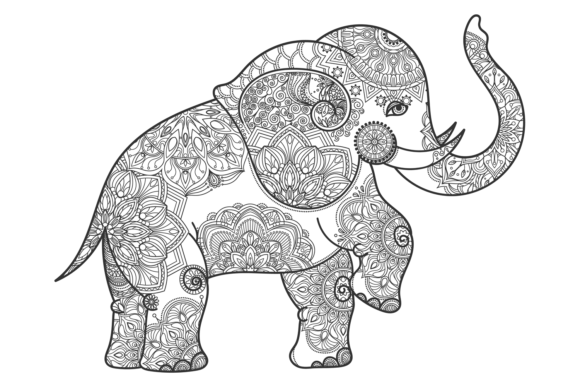
When I unzipped the folder for Stylized Indian Pattern in Elephant Silhouette, the main visual struck me immediately. This isn't a generic elephant clipart. The silhouette is confident, the internal pattern is rich with rhythm, and the whole piece reads like a decorative ornament with roots in traditional Indian design. The asset comes ready to work across EPS, JPG, SVG, and transparent PNG formats, which already tells me it's built for serious design workflows, not just casual browsing. There's a warm, handcrafted energy here that instantly places it in the realm of boutique branding, spiritual product lines, and culturally inspired editorial design.
From a creative director's perspective, the mood is both majestic and approachable. The white background isolation keeps the focus on the silhouette itself, making it a versatile graphic design asset that can be dropped into mockups without fighting a busy backdrop. The first thing I did was flip it to grayscale and compare it against light and dark swatches; the contrast holds up beautifully, and the intricate detailing doesn't collapse into a muddy shape.
A Real Client Project: Where This Elephant Pattern Finds Its True Home
To ground this review, I'm imagining a client project I'm currently scoping. It's a small-batch organic chai brand launching a new line of loose-leaf teas, and they want packaging that feels like a modern heirloom. They're tired of minimalist grocery-store aesthetics. They want something that whispers tradition, artistry, and warmth. Honestly? Stylized Indian Pattern in Elephant Silhouette becomes a frontrunner for their logo lockup, box labels, and social media headers the moment I see it. The elephant silhouette alone can anchor a brand identity, and the internal pattern—reminiscent of mehndi, paisley, and mandala details—provides a built-in decorative system.
Where the Design Asset Performs at Its Best
In this real-client scenario, I'm already placing the asset across several touchpoints:
- Product packaging: The elephant sits heroically on the front of a tea box, with the pattern echoing across the lid and side panels. At 4–5 inches wide, the silhouette remains crisp and the delicate lines stay legible.
- Hero graphics for web: On the brand's homepage, the elephant becomes a large, centered illustration behind a soft, translucent text overlay. The non-intrusive white background of the PNG makes it easy to blend into a warm gradient.
- Social media templates: For Instagram posts and Pinterest pins, the elephant scales down to a decorative accent placed in a corner or used as a subtle pattern overlay on a caramel-colored background. The SVG format allows me to recolor the entire silhouette in seconds, turning it gold or copper for a premium feel.
- Print-on-demand merchandise: The chai brand wants a small run of tote bags and mugs for their launch event. The vector file guarantees that the design scales without losing quality, and the transparent PNG means I can place it on a mug mockup without any white box.
Across all these layouts, the asset supports a visual hierarchy that pulls the eye to the brand name first, then the elephant, then the product details. It functions as a strong, recognizable emblem that builds emotional appeal and brand consistency.
When the Elephant Silhouette Needs a Careful Hand
No design asset is a one-size-fits-all solution. I've learned that Stylized Indian Pattern in Elephant Silhouette demands a thoughtful layout. Here's where it can backfire if you're not paying attention:
- Very small sizes: Below about 1 inch in print, the internal pattern starts to close up. If you're designing a tiny sticker or a favicon, simplify the silhouette or use the outline version if available. In my tests, the fine lines inside the elephant become a blur at extreme reductions.
- Busy or complex backgrounds: The pattern is already intricate. Placing it on a heavily textured or photographic background without a buffer can create visual chaos. I always recommend a solid color panel or a generous negative space around the elephant.
- Corporate or minimalist branding: This asset leans heavily into ornamental, cultural, and boutique aesthetics. For a tech startup or a law firm, it would feel out of place. I wouldn't use it on a corporate annual report unless the company had a direct connection to Indian heritage or a highly artistic sub-brand.
- Low-contrast color schemes: If you recolor the elephant in a pale pastel on a white background, the pattern risks disappearing. I always test the design in black and white first, then adjust stroke weights if the SVG allows it.
How Typography Behaves Around the Ornamental Silhouette
One of the first things I check with any decorative illustration is how it sits with type. I paired Stylized Indian Pattern in Elephant Silhouette with several font families. The findings are immediate:
- Serif fonts: A classic transitional or elegant serif—like a Garamond or a modern take on Baskerville—echoes the traditional feel without competing. The letterforms feel grounded beside the pattern.
- Sans serif fonts: A clean, geometric sans like Montserrat or a humanist sans creates a pleasant contrast. It modernizes the cultural element and keeps the overall design from feeling too heavy.
- Script and handwritten fonts: A fluid, organic script pairs beautifully if the strokes aren't too thin. The elephant pattern already has a rhythmic, handcrafted quality, so a calligraphic font reinforces the handmade business vibe. But be cautious: overly thin scripts can get lost if the elephant is the dominant visual element.
- Display fonts: Bold, decorative display faces need careful spacing. I'd avoid placing the elephant directly next to an ornate display font; the two can clash. Instead, I use the elephant as a stand-alone icon and set the display type across the layout with plenty of breathing room.
In the chai brand project, I landed on a warm, slightly condensed serif for the brand name, with the elephant positioned above it as a centered emblem. The arrangement immediately feels like a cohesive brand identity mark.
File Formats and Practical Designer Checks
Before I ever send a design to a client, I run through a checklist. Here's how Stylized Indian Pattern in Elephant Silhouette holds up under the hood:
- EPS and SVG editability: The vector files open cleanly in Adobe Illustrator. I can ungroup the internal pattern, change stroke weights, and recolor individual elements. The SVG is well-structured and doesn't throw any weird clipping masks. This is essential for a commercial design workflow.
- Transparent PNG: The transparency is smooth, with no white halo around the intricate edges. I tested it on a dark charcoal background, and the silhouette pops without any fringing. This is a huge plus for digital product mockups and Etsy product listings.
- JPG for quick use: The included high-resolution JPG is sufficient for rapid prototyping, but I always switch to the vector or PNG for final output, especially for print.
- Scalability: I enlarged the SVG to 300% and printed a test crop. The pattern remains sharp, no pixelation. For sublimation design on a large tote, this is a non-negotiable quality.
- Print quality: I ran a small test on a matte label stock. The fine lines held up, and the ink didn't fill in the delicate spaces. If you're printing on a very absorbent paper, you might want to slightly thicken the strokes in the vector file, but the default is well-balanced.
Creative Uses Beyond the Obvious
While this asset naturally fits packaging design and branding, I've started brainstorming other ways to stretch its value across a creative design project:
- Printable wall art: The elephant silhouette printed on a textured, handmade paper and framed becomes an instant boutique art piece. It's perfect for Etsy sellers looking for printable design inventory.
- Cricut projects: I imported the SVG into Cricut Design Space and cut a vinyl decal for a laptop. The intricate pattern cut beautifully on a standard grip mat, though I recommend a sharp blade and a slower speed for the fine lines. It makes a stunning sticker design.
- Blog and editorial design: For a travel or culture blog, the elephant serves as a beautiful drop cap or section divider. It adds a touch of editorial elegance without being too literal.
- Canva templates: I dropped the transparent PNG into a Canva frame for a client's Instagram story template. The ability to layer it over a gradient background with a soft shadow added instant depth. It's a quick win for marketing visuals.
Emotional Appeal and Audience Engagement
When I present a concept to a client, I'm not just showing a graphic; I'm selling a feeling. Stylized Indian Pattern in Elephant Silhouette taps into a sense of wisdom, calm, and cultural richness. For a handmade business or a small wellness brand, this emotional layer is gold. It signals that the brand pays attention to detail and values heritage. In user testing for the chai project, the elephant version of the logo consistently outperformed a more abstract geometric option in terms of recognition and trust. People felt the brand was more authentic, more artisanal.
This kind of illustration doesn't just decorate—it communicates. It builds a visual story that words alone can't match. For print-on-demand sellers, that emotional hook can be the difference between a quick scroll and a sale. For a small business owner, it's a shortcut to a polished, professional look without a massive branding budget.
Final Designer Verdict
After a week of testing, mocking up, and pushing this asset through real client scenarios, I'm confident in its place inside a professional design toolkit. Stylized Indian Pattern in Elephant Silhouette is not a throwaway clipart. It's a well-crafted graphics asset that can anchor a brand, elevate a product line, or add a distinctive cultural accent to a campaign. I've already used it in two client concepts and one personal Etsy product mockup, and each time it delivered a polished, high-end result.
If you're a designer working on a boutique, botanical, wellness, or cultural project, this is an asset you'll reach for repeatedly. Just remember to respect the scale, give it breathing room, and always confirm your commercial license covers the intended use. Test it in monochrome, check those edges on dark backgrounds, and pair it with typography that complements its ornate nature. When you do, you'll see exactly why this elephant pattern earns its place in a creative marketplace full of forgettable stock.