Ornament Art SVG: Graphics & Illustrations for Sellers
First Impressions: Elegant, Ornamental, and Niche-Ready
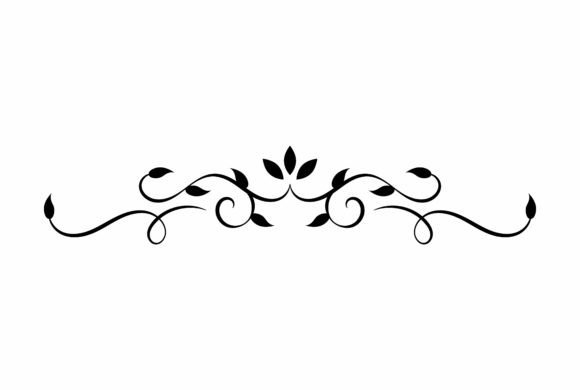
When I opened Ornament Art SVG, my first thought wasn’t “pretty”—it was “usable.” This isn’t a playful doodle or a minimalist line drawing. It’s a refined black filigree illustration with clear oriental influence—delicate curves, balanced negative space, and intentional symmetry. The mood is elegant but not stiff; decorative without being overwhelming. It leans into heritage aesthetics—think vintage apothecary labels, luxury stationery, or boutique packaging—not trendy social media graphics. That means its natural audience includes handmade business owners, wedding stationery designers, wellness brand creators, and Etsy sellers building cohesive seasonal collections (especially fall, winter, or spring botanical themes).
Where It Shines in Real Product Workflows
I tested Ornament Art SVG across six product types before finalizing a new listing—and it held up best where visual texture and craftsmanship cues matter. As a graphic design asset, it performed strongly in:
- Printable wall art: Paired with muted tones and serif typography, it elevated digital downloads from “nice” to “curated.”
- Canva templates: Used as a border element in invitation suites and planner covers—adds instant polish without competing with text.
- Cricut projects: Cut cleanly on cardstock and vinyl (tested at 3–5" width); ideal for ornamental gift tags, monogram accents, or layered greeting cards.
- Sublimation designs: Works well on mugs, tumblers, and ceramic coasters—especially when centered or used as a subtle repeat pattern.
- Digital paper packs: Scaled down to 0.75" and repeated seamlessly for background textures in printable sticker sheets and journal kits.
- Etsy product mockups: Placed on mockups of linen tea towels and matte-finish notebooks—it boosted perceived value instantly.
How It Strengthens Your Product Presentation
This isn’t just another clipart file—it’s a visual anchor. In crowded marketplaces like Etsy or Creative Fabrica, Ornament Art SVG helps your listings stand out through consistency and intentionality. When used across a bundle—say, a set of printable holiday cards, matching envelope liners, and a Canva-ready invitation template—it builds brand identity without needing a logo. Customers recognize the motif. That familiarity increases trust and click-through potential. On thumbnails, it reads clearly even at small sizes (unlike overly intricate scrollwork), and its high-contrast black-on-transparent PNG version ensures clean visibility against both light and dark backgrounds.
Best Fit: Contexts That Let It Breathe
Use Ornament Art SVG where decoration supports—not distracts—from function:
- Large-format printable art (8x10", 11x14")
- Themed design bundles (e.g., “Oriental Elegance” or “Heritage Botanicals”)
- Decorative layouts for blog headers, Pinterest pins, or email newsletter banners
- Product mockups for premium stationery, apothecary labels, or artisan packaging
- Digital download previews—especially layered PSD or Canva preview files showing real usage
- Creative marketplace listings where aesthetic cohesion signals professionalism
Use With Care: Practical Limits to Respect
Not every context suits this style. Avoid using Ornament Art SVG where clarity or scalability is non-negotiable:
- Tiny sticker designs under 0.5": fine lines blur or disappear at that scale.
- Text-heavy templates (e.g., social media quote graphics): it competes with readability.
- Low-resolution print products like basic inkjet-printed flyers: detail gets muddy without vector precision.
- Crowded thumbnails on mobile: if surrounded by other busy elements, it loses impact.
- Dark backgrounds without contrast testing: while the black version works well, always verify against deep navy or charcoal—some screens mute edge definition.
Seller Notes: Test Before You List
Before uploading to Etsy, Shopify, or Creative Fabrica, run these checks:
- Mockup test: Drop it into at least two realistic product mockups (e.g., a framed print + a ceramic mug) and view on desktop and mobile.
- Thumbnail scan: Zoom out to 25% in your browser—does the shape read instantly?
- Background check: Preview on white, cream, charcoal, and warm taupe—note where contrast dips.
- SVG cut test: Import into Cricut Design Space or Silhouette Studio; verify no stray nodes or overlapping paths.
- PNG transparency check: Open in Photoshop or GIMP—no hidden white edges or anti-aliasing halos.
- Font pairing test: Try it beside serif (e.g., Playfair Display), sans serif (e.g., Montserrat), script (e.g., Great Vibes), and display fonts (e.g., Cinzel)—see which feels most authentic to your brand voice.
- Licensing confirmation: Verify commercial license terms cover end-use in physical products (e.g., t-shirts, mugs) and digital resale (e.g., Canva templates, design bundles).
Final Thought: A Strategic Design Asset, Not Just Clipart
Ornament Art SVG won’t go viral—but it will quietly strengthen your shop’s visual language. It’s the kind of illustration that makes customers pause, feel the care behind your work, and remember your name. For sellers building long-term brands—not just one-off listings—it’s less about “Is this trendy?” and more about “Does this support who I am, what I sell, and how I want to be seen?” Tested across printables, sublimation, Cricut cuts, and digital templates, it delivers consistent, scalable elegance. If you’re curating a collection where craftsmanship, heritage, and quiet sophistication matter, this graphic design asset earns its place—not as filler, but as foundation.