Butterfly with Patterned Wings: A Graphics Review
When a client brief lands on my desk asking for something that feels delicate but structured, organic but refined, I immediately think of winged motifs. Recently, I pulled up Butterfly with Patterned Wings. Decorati while working on a brand identity for a small-batch candle maker. The client wanted packaging that felt collected, almost specimen-like, with a touch of vintage natural history. This illustration asset caught my attention within seconds of browsing.
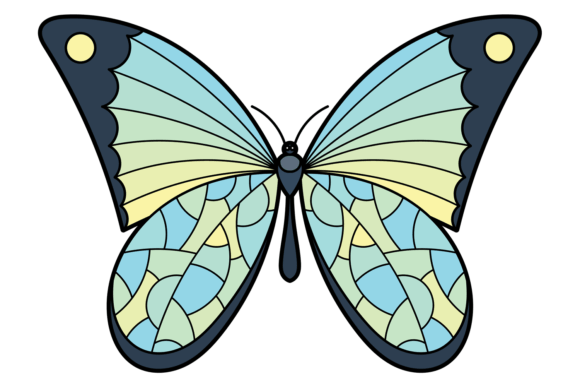
The first impression is quietly striking. The butterfly feels less like generic clipart and more like a studied decorative illustration. The patterned wings carry a sense of intentional ornamentation, almost like engraved linework meets modern vector styling. There is a stillness to the composition, a symmetry that reads as thoughtful rather than stiff. It sits on a clean white background, which makes isolating and placing it into layouts refreshingly simple. The mood lands somewhere between a scientific plate and a boutique wallpaper detail, and that crossover is precisely what makes it versatile for real client work.
What This Illustration Brings Into a Creative Project
Designers often search for graphics that can carry a concept without dominating it. Butterfly with Patterned Wings. Decorati does exactly that. The decorative moth quality gives it a slightly unexpected edge. It avoids the overly sweet or childish tone that many butterfly illustrations fall into. Instead, it leans toward a more mature, editorial aesthetic. I could see this working beautifully on a book cover, a wellness brand label, or a seasonal lookbook for a handmade business.
The wing patterning is the real differentiator here. It introduces texture and detail without requiring additional layering or manipulation. When placed on a kraft paper background for a product label mockup, the linework held up nicely. On a soft blush backdrop for social media graphics, it felt airy and elevated. The isolation on white means the edges stay clean, and the transparent PNG version drops into compositions without any halo or clipping path headaches.
A Fitting Choice for Handmade and Boutique Branding
For the candle maker project, I used Butterfly with Patterned Wings. Decorati as a secondary brand element. It sat beside a serif wordmark on the lid label and repeated as a subtle motif on the tissue paper pattern. The client wanted something that felt like a curated object, not a mass-produced sticker. This illustration delivered that sensibility. The decorative moth character reads as intentional and slightly antique, which aligned perfectly with the brand's beeswax and botanical fragrance line.
I have also tested it in a digital product context, specifically for an Etsy product suite. Sellers creating printable wall art, wedding invitation suites, or journal covers would find this asset plug-and-play ready. The EPS and SVG files mean you can scale it endlessly, recolor the wing details, or extract elements for a more abstract treatment. That kind of flexibility is essential when you are building a design bundle or a Canva template for customers who expect polished results with minimal effort.
How It Performs Across Different Design Scenarios
Let me walk through the practical placements I tested before committing to this graphic for client delivery. I ran it through the checklist I use for any commercial design asset, and here is what I found.
On packaging design, the illustration worked exceptionally well as a focal point on a flat label. The symmetry of the wings created a natural center of gravity, so typography sat comfortably above or below without fighting for attention. On a cylindrical product like a candle jar or a honey pot, the motif wrapped with enough visual weight to feel intentional from every angle. For social media graphics, particularly Pinterest pins and Instagram posts, the decorative wing pattern added visual interest without overwhelming the text overlay. I tested it with a sans serif font for a modern botanical look and with a script font for a more romantic, invitation-style composition. Both pairings worked because the illustration itself carries enough structure to anchor either direction.
On printable designs and Cricut projects, the SVG version proved invaluable. I imported it into design software, adjusted the cut lines, and tested it on adhesive vinyl for a tote bag mockup. The detailed wing patterning translated well to a single-color application, though I would recommend simplifying the most intricate interior lines if you plan to cut it at a very small size, under two inches wide. For sticker design, the transparent PNG dropped into a die-cut template cleanly, and the print quality held up on matte paper at both two-inch and four-inch sizes.
For editorial design and web design, the illustration served as a strong decorative accent. I placed it as a section divider on a blog layout, centered between paragraphs of text. It broke up the reading flow elegantly and added a visual rhythm that felt curated rather than chaotic. On a product landing page, it worked as a supporting hero graphic, framing the headline without pulling focus from the call-to-action button.
Where to Use This Asset With Care
No graphic is universally perfect, and candid design judgment means pointing out the limitations. Butterfly with Patterned Wings. Decorati has a level of detail that can get lost at very small sizes. If you are designing a favicon, a tiny footer icon, or a mobile app badge, the wing patterning will collapse into a blur. Test it at the intended output size before committing. I learned this the hard way years ago with a different ornate illustration, so now I always preview at thumbnail dimensions.
On crowded layouts with multiple competing elements, the decorative nature of the wings can feel busy. I would avoid placing this graphic over a complex background or alongside heavily textured photography. The white background isolation is a strength, but it also means the illustration needs breathing room to read clearly. Layering it over a dark, moody background can work beautifully if you adjust the line color, but the default black or dark-toned version will need contrast testing. I recommend pulling it onto both light and dark mockups early in the design process to see how the visual weight shifts.
For corporate branding or minimalist identity systems, this asset may feel too ornamental. A law firm, a tech startup, or a medical practice would likely find the decorative moth too whimsical for their visual hierarchy. However, for a lifestyle brand, a creative marketplace seller, a boutique product line, or a handmade business, the illustration lands in the sweet spot between artistic and accessible.
File Format Flexibility and Technical Checks
One of the first things I inspect when reviewing a graphics asset for client use is the file format lineup. Butterfly with Patterned Wings. Decorati comes with EPS, JPG, SVG, and transparent PNG options. That covers the essentials. The EPS file opened cleanly in Adobe Illustrator, and the vector paths were well-organized, which meant I could recolor the wing pattern in minutes. The SVG imported smoothly into both Affinity Designer and Canva, which matters if you are creating templates for customers who use different platforms.
The transparent PNG saved me time on the candle label mockup. I did not need to mask or remove any background. The edges were crisp at 300 DPI, and the transparency held up when I layered it over a textured paper background. I always recommend doing a quick print test on your home or office printer before sending a file to a commercial printer. On my test sheet, the fine lines in the wing pattern printed cleanly on both coated and uncoated paper, though the uncoated stock softened the detail slightly, which actually enhanced the vintage feel.
For print-on-demand and sublimation design, the JPG at full resolution gave me enough quality for a mug wrap and a t-shirt placement. The decorative moth motif translated well to fabric, and the pattern detail stayed visible on a light-colored garment. I would not recommend it on a dark heathered tee without adjusting the line color to a lighter tone, as the contrast can drop quickly.
Mood Compatibility and Emotional Appeal
Design is never just about placement. It is about feeling. Butterfly with Patterned Wings. Decorati carries a mood that sits somewhere between contemplation and elegance. It does not shout. It invites a closer look. For a client who wants their brand to feel personal, storied, or gently artistic, this illustration supports that emotional direction. I have seen similar motifs used in memorial stationery, botanical skincare lines, poetry book covers, and artisan chocolate packaging. The common thread is a desire to communicate care and attention to detail.
Audience engagement with this type of visual tends to be quieter but more loyal. Scrolling through a feed, a user might pause on a post featuring this illustration not because it is loud but because it feels different. That differentiation is valuable in crowded creative marketplaces where sameness is the default. For small business branding, that pause can be the difference between a scroll and a sale.
Practical Advice Before You Commit to Client Use
Before you finalize any client project with this graphic, run through a few non-negotiable design checks. Test the illustration in black and white to see if the patterned wings still hold their structure. If the design will ever appear in a single-color print scenario, like a receipt or a newspaper ad, you need to know whether the visual identity survives the translation. Butterfly with Patterned Wings. Decorati performed well in grayscale, though the lighter interior lines faded slightly. A quick contrast adjustment fixed that.
Check the commercial licensing carefully. This is not a step to skip. Verify that the license covers your intended use, whether it is for a client project, a digital product you plan to sell, a design bundle, or a print-on-demand listing. Some marketplaces have different tiers for commercial use, and assumptions can lead to problems. I always keep a record of the license terms in the client project folder for reference.
Place the illustration on real product mockups before presenting to a client. A flat vector on a screen looks different from a printed graphic on a curved surface or a fabric texture. I use mockup templates for candles, tote bags, greeting cards, and framed prints to give clients a realistic preview. Butterfly with Patterned Wings. Decorati looked convincing across all these mockups, which gave me confidence in the recommendation.
Why This Asset Earns a Place in a Designer Toolkit
I have downloaded and discarded more graphics than I care to count. The ones that stay in my toolkit are the assets that solve problems without creating new ones. Butterfly with Patterned Wings. Decorati earned its spot because it is adaptable, well-structured, and aesthetically distinct. It does not look like every other butterfly graphic in the search results. The decorative moth quality, the patterned wing detail, and the clean isolation make it a reliable choice for projects that need a touch of ornament without tipping into excess.
For graphic designers, brand owners, content creators, and creative marketplace sellers, this illustration fills a specific niche. It works for packaging, social media, printables, editorial layouts, and small business branding. It pairs well with both modern and vintage typography. It holds up in print and on screen. It requires some care in placement and sizing, but the same can be said for any detailed design asset. The transparency and vector editability add practical value that speeds up workflow and expands creative possibilities.
If your next project calls for a visual element that feels curated, slightly antique, and quietly sophisticated, this is a graphics asset worth testing. Try it on a product label mockup. Layer it over a soft neutral background. Pair it with a serif font and see how the mood shifts. The best design tools are the ones that spark ideas rather than just filling space, and Butterfly with Patterned Wings. Decorati does exactly that.